CUSTOM SOFTWARE DEVELOPMENT
A custom software development company building web applications, mobile apps, and ERP systems for startups and enterprises worldwide. From a first MVP to ERP implementation and API integration across an existing stack. AI makes us faster. It doesn't make the architectural calls.

Software we've built
Systems we designed and engineered ourselves, back office included.
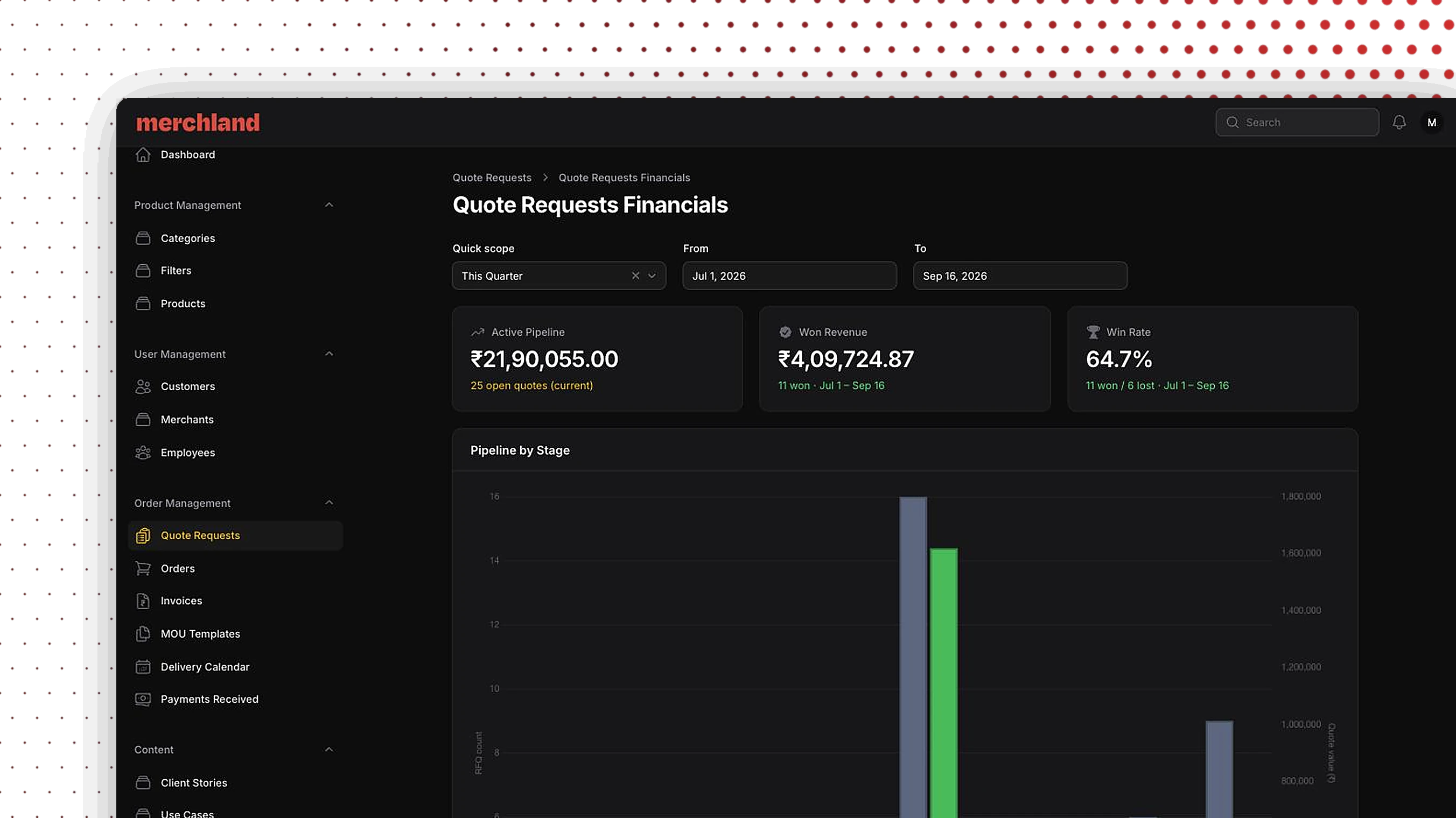
Merchland
B2B marketplace with a quote-to-order ERP
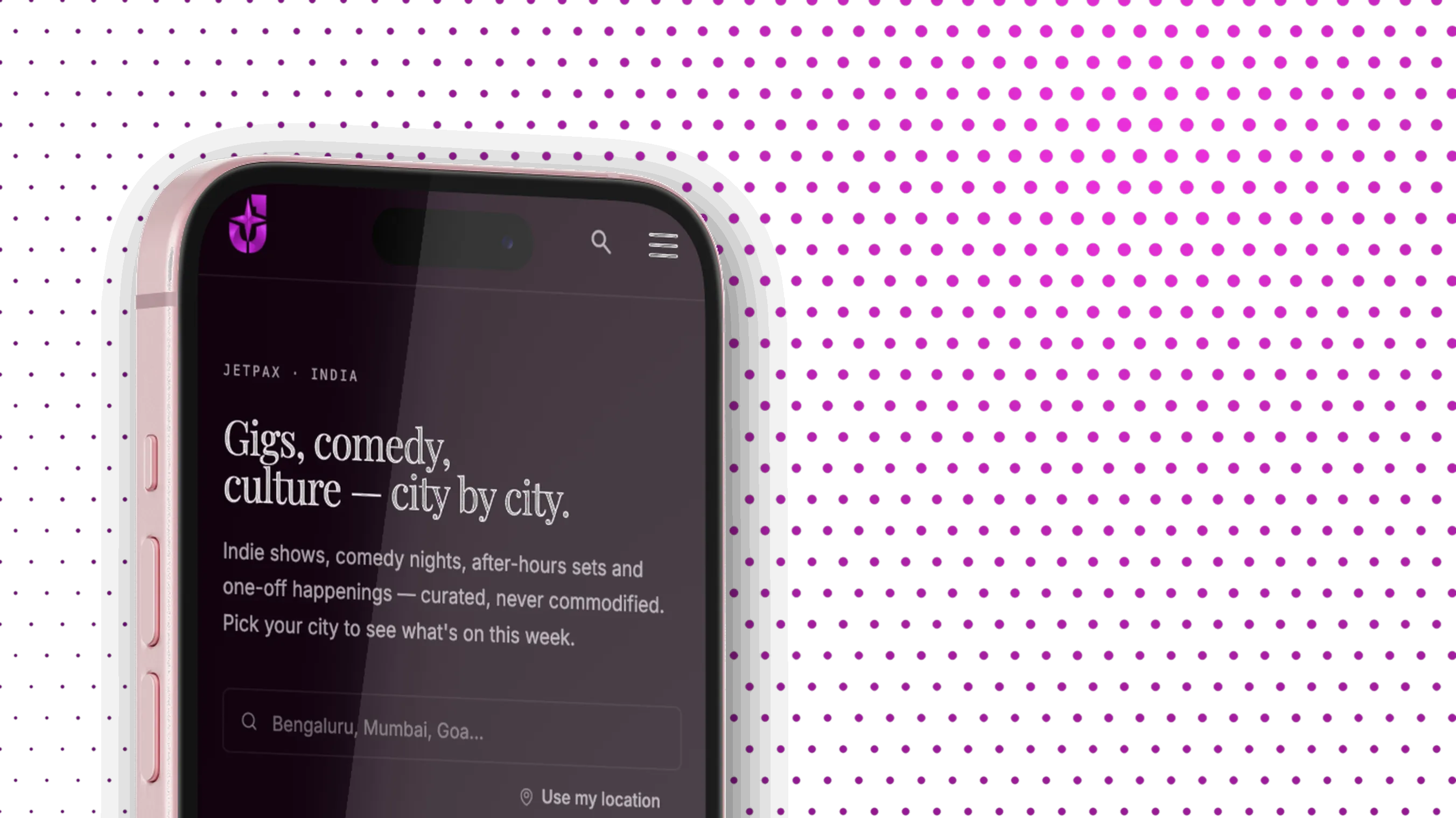
JetPax
Ticketing platform and ERP back office for India's live events
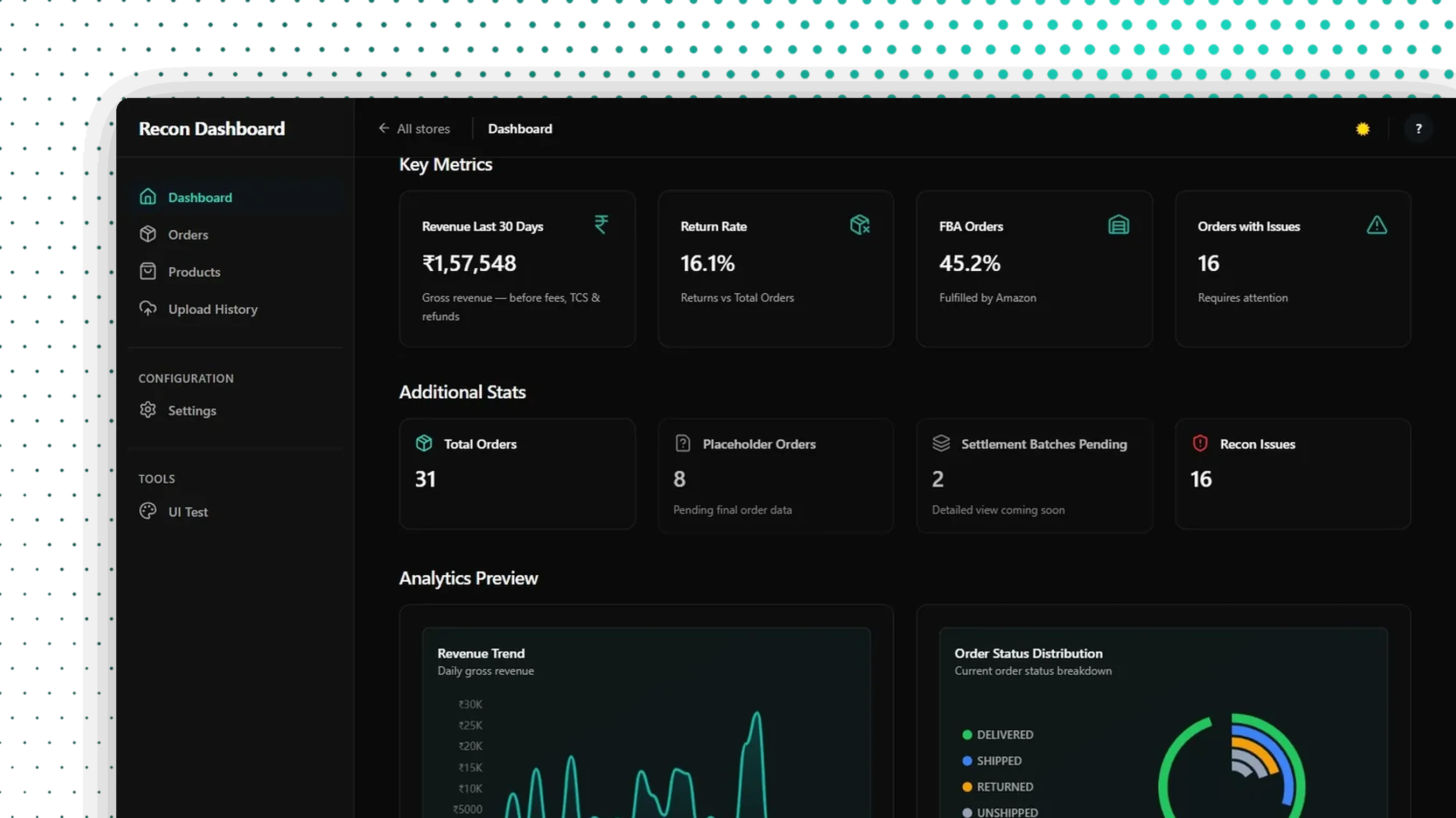
RecoBean
Multi-tenant SaaS for marketplace settlement reconciliation

Tooth Print
AI-search-ready website and CMS for a dental clinic
SOFTWARE DEVELOPMENT SERVICES
Custom software development services, ERP first. Each one names what we build and what we usually build it on.
ERP software development for teams whose money, stock and orders run in more than one place. We build the ledger, the role-based portals and the statutory tax logic around your process, then hand you the source.
- Custom ERP Software: We build around your process instead of bending it to fit a licence.
- Statutory Tax & Settlement: GST, TCS and TDS computed on every transaction. JetPax exports 5 statutory filings and pays hosts in 3-8 days.
- Role-Based Portals: Every team works on one data model. JetPax runs 5 portals, Merchland runs 3.
- ERP Implementation: On an existing system, we work in what's already there.
Web applications that render on the server, so Google and the AI assistants your buyers ask read your real content, not an empty page.
- Responsive Design: Dynamic and responsive interfaces across all devices using modern frameworks
- Tailored Features: Features that match how your team already works.
- SEO Optimization: Websites optimized for search engines to increase online visibility
- Built to Scale: Query budgets, caching, and queue-backed jobs from the first sprint.
One codebase that installs from the browser and works offline. JetPax ships web, PWA and Android from a single Vue and Nuxt codebase.
- Offline Functionality: Reliable offline capabilities to keep users engaged without internet
- App-Like Experience: Home screen installation, push notifications and offline pages
- Cross-Platform: PWAs that work smoothly across desktop, tablet, and mobile
- Cost-Efficient: Single application providing both web and mobile functionality
Cross-platform mobile apps from the same codebase as your web app. JetPax's Android app ships with Capacitor from the code that runs its website.
- Custom UI/UX: Intuitive interfaces that meet user expectations for engagement
- Feature-Rich Apps: GPS tracking, push notifications, in-app payments, and more
Storefronts that keep catalogue, payments, and inventory on one data model. Hosted or headless, your call.
- Payment Integration: Razorpay checkout and payouts, wired to the ledger.
- Inventory Management: Systems for managing stock levels and product operations
- Optimized UX: Fast, user-friendly interfaces to boost conversions
Custom RESTful and GraphQL APIs. Versioned, documented, and rate-limited, so another team can build on them without asking you questions.
- REST & GraphQL APIs: Efficient APIs for easy integration with other services
- Third-Party Integrations: Payment processors, social media, CRM, and analytics tools
- Microservices: Decoupled architecture for flexibility and easier maintenance
- Real-Time Data: Real-time data synchronization for cohesive user experiences
Application modernization services for the system your team has outgrown, whether it's a codebase or a spreadsheet. On an existing codebase we work in what's already there; on spreadsheets and chat threads we build the system that replaces them.
- Existing Codebases: On an existing codebase, we work in what's already there.
- Spreadsheets & Chat Threads: Merchland's orders ran on WhatsApp threads, spreadsheets and phone calls. We replaced them with a quote-to-order ERP.
- Discovery First: We start with a discovery phase, priced separately, so you get a plan you own before anything is rebuilt.
Headless CMS development on Laravel and Filament, with a Nuxt front end that renders every page on the server. Your team edits content in a panel it owns.
- Server-Rendered Pages: Google and the AI assistants your buyers ask read your real content, not an empty page.
- Tested Back End: Hype's brand platform runs this way: a Nuxt site on a Laravel API, with 88 backend tests across 20 feature suites.


AGILE DEVELOPMENT PROCESS
Six stages, run in two-week sprints. You see working software from week 2.

Discovery & Planning
We start with your process and your data, then write a specification you own. We price discovery separately, so you can stop after it and take the spec to whoever builds it.
- Requirement Analysis: Gather detailed requirements for project scope and functionalities.
- Feasibility Study: Identify challenges and determine the best technology stack.
- Project Roadmapping: Strategic plan with timelines, milestones, and resource allocation.

UI/UX Design
Our design team creates visually appealing and user-friendly interfaces that reflect your brand identity.
- User Research: Analyze behaviors for user-centric interface.
- Wireframing & Prototyping: Interactive prototypes using Figma, clickable before any code is written.
- Visual Design: High-fidelity designs with your brand elements.

Development & Integration
We build in two-week sprints, so there's working software to look at from week 2 rather than a reveal at the end.
- Agile Methodology: Iterative progress and flexibility for changes.
- Full-Stack Development: Server-side and client-side components.
- API Integration: Third-party services for enhanced features.

Testing & QA
Automated tests run on every merge. Load and security testing happen before release, not after launch.
- Performance Testing: Assess stability under various loads.
- Security Testing: Identify vulnerabilities and protect against threats.
Deployment & Launch
Automated deploys to staging and production, with error tracking on from the first release.
- Server Configuration: Reliable, scalable hosting setup.
- CI/CD Automation: Every merge to main goes out the same way.
- Post-Launch Monitoring: Ensure everything runs smoothly.

Maintenance & Support
Fixed-scope projects carry a 30-day warranty after delivery. After that, we stay on for updates or hand over to your team with documentation you can actually use.
- Regular Updates: New features and performance improvements.
- Technical Support: Dedicated support for any issues.
One codebase on every screen
CUSTOM SOFTWARE USE CASES
Example builds, described the way we'd scope them. These are patterns, not named client results.
Inventory Management for Retail
A retailer tracking stock by hand runs out of what sells and over-orders what doesn't.
Solution
- A custom inventory management system wired to the point-of-sale system
- Stock updated on every sale, with automatic reorder alerts
- A dashboard showing what sells, what sits and what to reorder
Benefits
- Less cash tied up in slow stock
- Fewer stockouts on the items customers come back for
- Reorder decisions made from data, not memory
Custom CRM for a B2B Sales Process
A B2B team whose sales process doesn't fit an off-the-shelf CRM ends up working around it in spreadsheets.
Solution
- A custom CRM built around the stages the team already sells in
- Lead scoring and reports on the same data as quotes and orders
- A mobile app for reps in the field
Benefits
- Sales and finance work from one record, not two databases
- Every account's history in one place when it calls back
- Reports that answer the questions your managers actually ask
Fleet Management for Logistics
A logistics operator dispatching by phone can't see where its vehicles are or which deliveries will run late.
Solution
- A fleet management system with live GPS tracking
- Route planning that orders stops to cut drive time
- Live messaging between drivers and dispatch
Benefits
- Fewer wasted kilometres per route
- Late deliveries flagged before the customer calls
- One screen showing every vehicle and every drop
OUR TECHNOLOGY STACK
PHP (Laravel, Filament), JavaScript and TypeScript (Nuxt, Vue, React, Node), Python (Django), Java (Spring), C# (Unity). The systems can be built in any of them; the stack follows the problem, not habit. On an existing codebase, we work in what's already there.
Frontend Development
Server-rendered interfaces Google can read without running our JavaScript.
Mobile Development
One codebase for web, PWA and Android.
Backend & APIs
Laravel and Filament for ERP back offices, Django for data-heavy SaaS.
Database Solutions
Relational first, with a cache and a queue beside it.
DevOps & CI/CD
Automated deploys to staging and production, error tracking from the first release.
WHY CHOOSE IOTRON?
AI can write code. It can't own an architecture. Six things we do that a prompt doesn't, and you can check each one against work we've shipped.
Eight Years in Production
Eight years and 50+ projects: ERP and financial systems, order management, e-commerce platforms, games.
Designed Before It's Built
The data model and the system boundaries are agreed and written down before sprint one, around your process rather than a licence's. Version two extends the system instead of rewriting it.
The Stack Follows the Problem
PHP (Laravel, Filament), JavaScript and TypeScript (Nuxt, Vue, React, Node), Python (Django), Java (Spring), C# (Unity). The systems can be built in any of them; the stack follows the problem, not habit. On an existing codebase, we work in what's already there.
Working Software From Week 2
Two-week sprints, working software from week 2. A focused MVP takes 8-12 weeks; a full platform takes 4-8 months.
Tested Before It Ships
Automated tests and code review on every merge. Hype's platform ships with 88 backend tests across 20 feature suites, including one that fails if a page starts issuing more database queries than it should.
Engineers Own Every Merge
We use AI for scaffolding, test drafts and code search. Engineers own the architecture and every merge, and you get weekly demos and a direct channel to them.
Questions buyers ask
How long does it take to build custom software?
Timelines depend on scope. A focused MVP typically takes 8-12 weeks. A full-featured platform takes 4-8 months. We ship in 2-week sprints so you see working software from week 2.
What tech stack do you use for custom software?
PHP (Laravel, Filament), JavaScript and TypeScript (Nuxt, Vue, React, Node), Python (Django), Java (Spring), C# (Unity). The systems can be built in any of them; the stack follows the problem, not habit. On an existing codebase, we work in what's already there.
What do your ERP software development services include?
We build custom ERP systems around how your company already moves money, stock and orders. That usually means a ledger, role-based portals for each team, and the statutory tax logic your jurisdiction requires. For JetPax we built a multi-portal ERP with 5 role-based portals that computes GST, TCS and TDS on every transaction and pays hosts in 3-8 days. For Merchland we built a quote-to-order ERP with vendor price management. On an existing system, we work in what's already there. If a packaged ERP genuinely fits your process, we'll tell you.
How much does ERP software development cost?
It depends on how many portals you need, whether there's tax or settlement logic, and whether you're moving off an existing system. A focused first version, with one portal on one platform and no tax engine, sits in our 8-12 week band. A multi-portal ERP with a compliance engine sits in the 4-8 month band; JetPax was that size. We quote a fixed figure after a discovery phase. We price the discovery separately so you can stop after it with a specification you own, whoever builds it.
Do you offer MVP development services for startups?
Yes. A focused MVP typically takes 8-12 weeks. We work in two-week sprints, so you see working software from week 2. We build it on the stack the full product will run on, so version two extends the MVP instead of rewriting it.
Do you do legacy application modernization?
Yes, whether the system you've outgrown is a codebase or a spreadsheet. Merchland's orders ran on WhatsApp threads, spreadsheets and phone calls before we built its quote-to-order ERP. RecoBean's sellers reconciled Meesho, Flipkart and Amazon settlements by hand before we built its multi-tenant reconciliation system. On an existing codebase, we work in what's already there. We start with a discovery phase, priced separately, so you get a plan you own before anything is rebuilt.
Do you offer software development outsourcing?
Yes, as an engineering team, not a reseller. We're based in India (IST, UTC+5:30), with 4-6 hours of overlap with Europe and morning overlap with the US East Coast. You can hire a dedicated team that joins your standups and tools, or give us a fixed-scope project with payments tied to milestones. We've shipped 50+ projects for 30+ clients since 2018.
Do you build headless CMS platforms?
Yes. We build the content back end in Laravel with a Filament admin panel and the front end in Nuxt, which renders every page on the server. That means Google and the AI assistants your buyers ask read your real content, not an empty page. Hype's brand platform runs this way: a Nuxt site on a Laravel API, with 88 backend tests across 20 feature suites. We don't build on WordPress or Sitecore.
Do you build custom CRM software?
Yes, usually inside the ERP rather than as a separate system. Customer records, quotes and orders sit on the same data as stock and money, so sales and finance stop reconciling two databases.
Who owns the code and IP?
You do. All source code, designs and documentation belong to you. We'll sign an NDA before discovery if you need one.
Can you fix or rebuild an app built with AI coding tools?
Yes. We audit the code, test its security and load, and tell you what breaks first. Then we keep what's sound and rebuild what isn't. In Veracode's 2025 test of 100+ AI models, 45% of generated code carried a known security flaw, so the audit usually starts there.
Do you use AI to write code?
Yes, for scaffolding, first drafts of tests and code search. Engineers decide the architecture, the data model and the security boundaries, and every merge gets code review and automated tests, whoever wrote the first draft.
ENGINEERED,NOT VIBED
Tell us what your system has to do. We'll come back with a scope, a timeline band and a straight answer on whether custom is the right call.