AI SOFTWARE DEVELOPMENT
Agentic systems, MCP servers and AI automation, built by software engineers first. Guardrails and cost controls ship with the system, not after it. Have an idea where AI could help? We'll tell you honestly whether it's worth building.
AI DEVELOPMENT AND CONSULTING SERVICES
Custom AI development, from agents and MCP servers to document processing and computer vision, built by software engineers to run in production.
AI Automation & Application Development
You need AI that works in production, not just in a notebook. We build AI applications with the same engineering discipline we bring to any software project. Security, compliance and cost control ship with it.
- Production Engineering: From prototype to shipped product: infrastructure, CI/CD, monitoring and graceful failure handling
- Security & Compliance: Prompt injection testing, data leakage controls and an audit log of what the model did
- Cost Optimization: Model routing, semantic caching and token budgets. A naive pipeline can cost many times what a tuned one does
- LLMOps: Model monitoring, drift detection, evaluation pipelines, and automated quality checks
- Document & Invoice Processing: AI extraction from invoices, purchase orders and statements, posted straight into your ERP with a human check on exceptions
- Workflow Automation (n8n): n8n and custom workflows that move data between your tools, with AI steps where judgment is needed
- Industry Context: We learn your domain before writing a line of code, whether that's healthcare, fintech or e-commerce
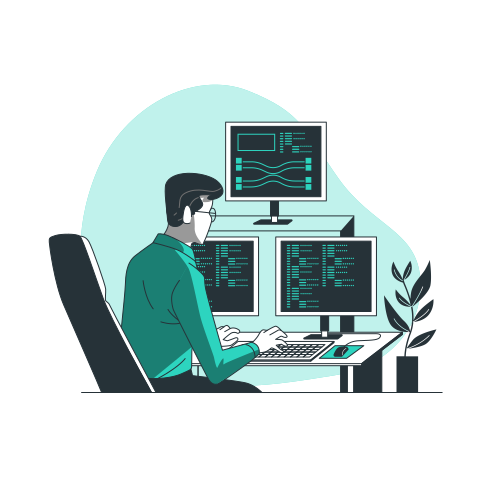
MCP Server Development & AI Integration
AI is only as good as the data it can reach. We build MCP servers that expose your systems to AI safely, and wire agents into the CRMs, ERPs, databases and SaaS tools you already run. The AI then works inside your business, not beside it.
- Data Unification: Connect siloed systems into AI-ready data infrastructure without rip-and-replace
- Enterprise Search: Semantic search across your existing repositories, combining vector and structured search
- Legacy Modernization: Add AI capabilities to existing applications through API-driven service layers
- AI Consulting & Strategy: A standalone engagement: we assess your data, systems and use cases and tell you where AI pays off and where it doesn't, before you build
- Pipeline Architecture: ETL, data quality assurance, and real-time sync for AI systems that need current information
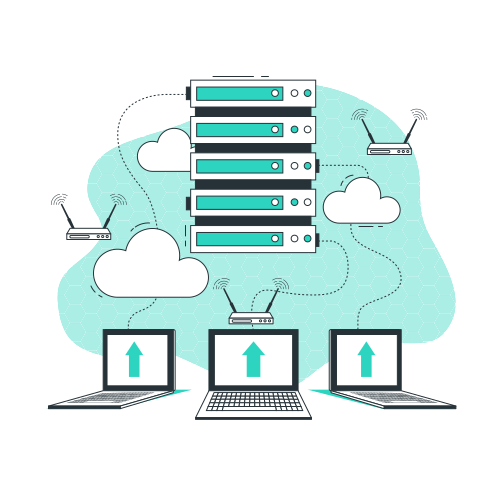
AI Agent Development
One agent is easy. Agentic AI, where several agents coordinate, recover from failures and stay inside guardrails, is a software architecture problem. That's the part we're actually good at.
- Architecture Design: Agent roles, communication protocols, state management, and orchestration patterns
- Human-in-the-Loop: Approval gates, escalation paths, and oversight for critical decisions
- Governance & Security: Access controls, audit trails, kill switches, and cost guardrails for every agent
- Monitoring: Real-time observability into agent behavior, performance, and costs
- Edge Case Engineering: What happens when agents fail, hallucinate or run up costs. We design for that, not for the demo
- Customer Service Chatbots: AI chatbots that answer from your own documents and hand off to a person, with the conversation logged
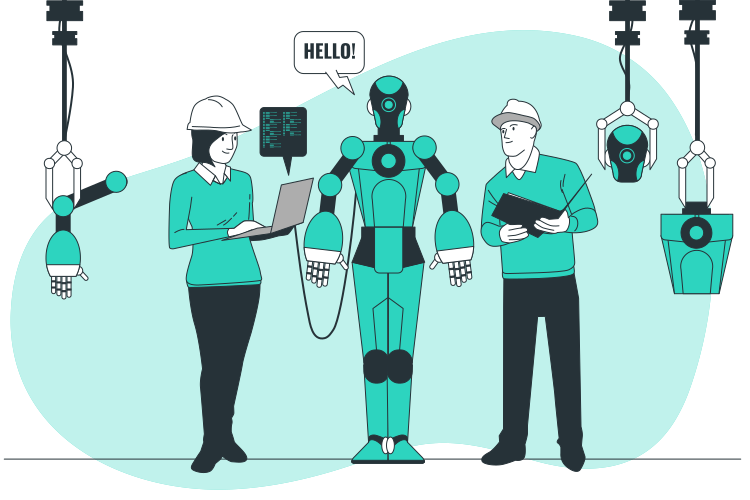
Computer Vision Development
Detection, classification and OCR on images and video, built into the system that acts on the result. Deployed in the cloud or on-premise.
- Object Detection: Find and count what matters in images and video streams
- Image & Document OCR: Read text from scans, photos and forms, with low-confidence fields sent to a person
- Visual Inspection: Flag defects and anomalies against the standard you define
AI SOLUTIONS IN PRACTICE
Example builds, described the way we'd scope them. These are patterns, not named client results.
Multi-Agent Sales Pipeline
A SaaS company wants to scale outreach without scaling headcount at the same rate. AI agents can handle research, qualification and CRM updates, but they need architecture, not just prompts.
Approach
- Multi-agent system: research agent, outreach agent, qualification agent, CRM sync agent
- Human-in-the-loop approval gates for high-value prospects
- Monitoring dashboard with cost tracking per pipeline stage
Expected Outcomes
- Scale pipeline coverage without proportional hiring
- Agent costs a fraction of equivalent headcount
- Full audit trail for compliance and optimization
Enterprise Knowledge System
A firm has institutional knowledge spread across legacy systems. It needs search that surfaces the right document and doesn't invent references.
Approach
- Production RAG system across multiple document repositories with semantic search
- Citation checks that reject any answer whose source can't be found
- Role-based access controls respecting data sensitivity
Expected Outcomes
- Faster research, with every answer linked to its source
- Every answer cites a source document you can open
- Works within existing security and access policies
AI-Powered Customer Support Platform
A growing e-commerce company needs to handle support volume without scaling headcount 1:1. Off-the-shelf chatbots aren't cutting it. They need something that actually understands their product catalog and policies.
Approach
- Production RAG system trained on product catalog, policies, and past support tickets
- Escalation logic that routes complex issues to human agents with full context
- Monitoring dashboard tracking resolution rates, hallucination checks, and cost per interaction
Expected Outcomes
- More support volume handled without hiring at the same rate
- Consistent, accurate responses grounded in actual product data
- Clear metrics showing what AI handles vs what needs a human
AI TECH STACK
What we build AI systems with today. The list changes as the models do.
Agent Frameworks
For building multi-agent systems that coordinate, maintain state, and handle failures.
LLM Providers
We pick the model per task. Not every task needs the most expensive one.
Vector & Data
Vector search and data pipelines for RAG systems and semantic retrieval.
AI Gateway & Observability
Model routing, cost tracking and monitoring, so you can see what each call costs and which model answered.
Backend & APIs
The same backend stack we use for all our software, extended for AI workloads.
Infrastructure
Cloud deployment with the compute and scaling AI workloads actually need.
WHY CHOOSE IOTRON?
AI can write code. It can't own an architecture. Six things we do that a prompt doesn't, and you can check each one against work we've shipped.
Eight Years in Production
Eight years and 50+ projects: ERP and financial systems, order management, e-commerce platforms, games.
Designed Before It's Built
The data model and the system boundaries are agreed and written down before sprint one, around your process rather than a licence's. Version two extends the system instead of rewriting it.
The Stack Follows the Problem
JavaScript and TypeScript (React, Next.js, Vue, Nuxt, Node, NestJS), PHP (Laravel, Filament), C# (.NET), Python (Django), Java (Spring). The systems can be built in any of them; the stack follows the problem, not habit. On an existing codebase, we work in what's already there.
Working Software From Week 2
Two-week sprints, working software from week 2. A focused MVP takes 8-12 weeks; a full platform takes 4-8 months.
Tested Before It Ships
Automated tests and code review on every merge. Hype's platform ships with 88 backend tests across 20 feature suites, including one that fails if a page starts issuing more database queries than it should.
Engineers Own Every Merge
We use AI for scaffolding, test drafts and code search. Engineers own the architecture and every merge, and you get weekly demos and a direct channel to them.
Questions buyers ask
What AI software development services do you offer?
We build AI agents and agentic systems, MCP servers that expose your internal tools to models safely, AI automation for document and workflow processing, RAG pipelines and custom ML workflows. We build for production. A proof of concept that never leaves the notebook isn't the goal.
Are you a generative AI development company?
Yes. Our AI work runs on generative models: agents that call your tools, RAG search over your documents, and automation that reads and writes documents. We're software engineers first, so the model is one component. The system around it, with permissions, logging and cost limits, is most of the work.
Can you integrate AI into our existing software?
Yes. We integrate AI capabilities into existing products: intelligent search, automated classification, content generation, anomaly detection, and conversational interfaces. We work with your current architecture, not against it.
What is an MCP server, and do you offer MCP server development?
Model Context Protocol is an open standard that lets an AI model call your systems through one described interface instead of a bespoke integration per tool. We build MCP servers over internal APIs, databases, and SaaS accounts, with scoped permissions and audit logging so a model only ever reaches what you allowed.
Do you offer AI consulting as a separate engagement?
Yes. AI consulting and strategy is a fixed-scope engagement: we review your data, systems and processes, rank the use cases by payoff and risk, and hand you a plan you own. Many clients build with us afterwards; you don't have to.
Can AI process our invoices and documents?
Yes. AI document processing reads invoices, purchase orders and statements, extracts the fields, and posts them into your ERP or accounting system. Low-confidence fields go to a person instead of being guessed. It fits naturally on the ERPs we build.
Do you build n8n workflows?
Yes. We build workflow automation in n8n when it fits, and in custom code when the workflow needs tests, versioning or volume n8n doesn't handle well. Either way, AI steps get logging and a human check on consequential actions.
Do you build AI chatbots for customer service?
Yes. They answer from your help docs, order data and policies through RAG, not from the model's memory, and hand off to a person when they're unsure.
Do you do computer vision development?
Yes: object detection, image classification, OCR and visual inspection, deployed in the cloud or on-premise, and wired into the system that acts on the result.
Do you build custom AI models or use existing ones?
Both. For most business applications, we use foundation models (GPT, Claude, Llama) with fine-tuning and RAG for domain-specific knowledge. We build custom models only when existing ones genuinely cannot solve the problem.
How do you handle AI security and data privacy?
We isolate data, filter model output and keep an audit log of what the model did. Prompt injection can't be filtered away completely, so we limit what an agent can touch with scoped permissions and put a human approval step in front of consequential actions. For sensitive data we deploy private cloud or on-premise models.
AI AGENTS AND AUTOMATION THATSHIP
Agentic systems, MCP servers and AI automation, built by software engineers first. Guardrails and cost controls ship with the system, and it keeps working once real users arrive.