DEFEND YOUR DIGITAL FRONTIER
We find vulnerabilities before attackers do. Web application penetration testing, API and network testing, red teaming, and a VAPT report with findings ranked by what an attacker reaches first. LLM applications, AI agents and AI-generated code too.

PENETRATION TESTING AND VAPT SERVICES
Vulnerability assessment and penetration testing (VAPT) for web applications, APIs and networks, plus AI security, red teaming and remediation.
Web & Mobile Application Penetration Testing
Security testing for web, mobile and API applications. We find the vulnerabilities before they reach production.
- Web Application Penetration Testing: Business logic flaws, authentication bypass, injection attacks, and session management testing
- Mobile Application Security Assessment: iOS & Android binary analysis, data storage review, certificate pinning, and runtime manipulation testing
- API Security Testing: REST, GraphQL and SOAP: authorisation bypass, rate limiting, data exposure and injection testing
- Secure Code Review: Manual and automated source code analysis to identify vulnerabilities at the code level before deployment
AI & LLM Security
Shipping an AI feature adds an attack surface your existing tests do not cover. We assess LLM applications, agents, and MCP servers against it.
- Prompt Injection Testing: Direct and indirect injection, jailbreaks, and tool-call abuse against your system prompt and guardrails
- AI Red Teaming: Adversarial evaluation of model behaviour: data exfiltration, unsafe output and agent privilege escalation
- LLM Application Security Review: RAG pipeline and vector store leakage, output handling, rate and cost abuse, MCP server permission scope
- AI Governance & Compliance: Audit trails, model inventory, and controls mapped to NIST AI RMF and the EU AI Act
Network Penetration Testing & Security Audit
Identify weaknesses in your network perimeter and internal infrastructure before attackers exploit them.
- External Network Penetration Testing: Testing exposed services, misconfigurations, and exploitable entry points from an attacker's perspective
- Internal Network Penetration Testing: Lateral movement, privilege escalation, and Active Directory assessment from within the network
- Network Architecture & Segmentation Review: Evaluating network design for proper isolation, containment, and defense-in-depth effectiveness
- Firewall & Perimeter Review: Firewall rule review, secure zone design, DMZ architecture and gateway configuration review
- Cloud Penetration Testing: AWS, Azure and GCP: IAM, storage exposure, network rules and the services an attacker can reach from the internet
Security Hardening & Configuration
Harden your systems against attack by benchmarking configurations against industry standards and best practices.
- System Hardening: Benchmarking server, OS, and service configurations against CIS, ISO 27001, and NIST standards
- Secure Network Design: Architecture consulting for zero-trust, network segmentation, and defense-in-depth strategies
- Server & OS Configuration Review: Identifying insecure defaults, unnecessary services, and misconfigured access controls
Red Teaming & Adversary Simulation
Go beyond standard testing. Our red team simulates real-world attack scenarios to test your detection and response capabilities.
- Red Team Assessment: Multi-phase, objective-based attack simulation mimicking real threat actors
- Phishing & Social Engineering Campaigns: Email phishing, vishing, and pretexting campaigns to measure your organization's human risk factor
- Purple Teaming: Collaborative Red + Blue team exercises to improve detection capabilities and incident response
- Tabletop Exercises: Scenario-based incident response walkthroughs for leadership, SOC teams, and critical stakeholders
Security Posture Assessment
Understand where you stand. We assess your overall security maturity and provide a prioritized roadmap for improvement.
- Cybersecurity Maturity Assessment: Evaluating your current security posture against NIST CSF and ISO 27001 frameworks with gap analysis
- Vulnerability Assessment: Automated scanning with manual validation. You get a remediation roadmap ranked by CVSS severity
- Security Architecture Review: Evaluating your overall security design, identifying structural weaknesses and single points of failure
- PCI DSS Penetration Testing: Testing scoped and reported against PCI DSS requirement 11.4, for your QSA or self-assessment
- Vulnerability Scanning Service: Scheduled authenticated scans, with every hit validated by hand before it reaches your report
Remediation & Enhancement
We fix what we find. Hands-on vulnerability remediation, then advice on the controls that stop it coming back.
- Vulnerability Remediation: Hands-on fixing of identified security issues across application, network, and infrastructure layers
- Security Enhancement Consulting: Advice on strengthening defences, implementing security controls and improving processes after remediation
- Patch Management Strategy: Prioritization frameworks, rollout planning, and validation testing for systematic vulnerability closure
- PTaaS & Retest Plans: Penetration testing as a service: a yearly plan with testing after each major release and retests until fixes hold
Security Training & Awareness
Your team is your first line of defense. We provide hands-on training and awareness programs to build a security-conscious culture.
- Security Awareness Programs: Organization-wide training on threats, phishing recognition, password hygiene, and security best practices
- Secure Development Training: For engineering teams: OWASP secure coding patterns, threat modelling and security-first development practices
- Executive & Board Briefings: Strategic risk communication and security posture reporting for leadership and board-level stakeholders
- Workshops & Seminars: Hands-on sessions on one security domain at a time, pitched at your team's role and level





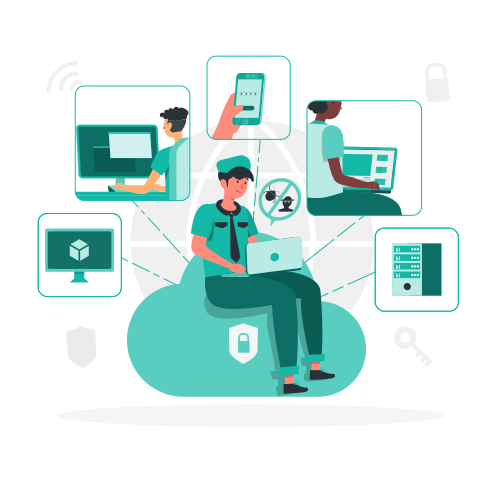

SECURITY ASSESSMENT PROCESS
Seven steps, from scoping to a retest that confirms each fix held. Nothing gets tested until the scope and rules of engagement are signed.

Discovery & Scoping
We begin by understanding your environment, assets, and security goals to define the assessment scope and boundaries.
- Asset Inventory: Map your attack surface: applications, networks, endpoints and cloud resources.
- Threat Modeling: Identify likely threat actors and attack vectors relevant to your industry.
- Scope Definition: Agree on testing boundaries, timelines, and communication protocols.

NDA & MOU Signing
Before any technical work begins, we execute formal agreements to protect both parties.
- Non-Disclosure Agreement: Legal commitment to strict confidentiality of all findings and client data.
- Rules of Engagement: Define authorized testing methods, off-limits systems, and escalation procedures.
- Legal Authorization: Written permission ensuring all testing activities are legally authorized and documented.

Reconnaissance & Assessment
Systematic information gathering and attack surface mapping to identify potential entry points.
- OSINT Gathering: Public information, DNS records, exposed services, and leaked credentials.
- Vulnerability Scanning: Automated scanning with manual validation to eliminate false positives.
- Attack Surface Analysis: Map all potential entry points and prioritize targets.

Testing & Exploitation
Active security testing within the agreed scope and rules of engagement.
- Exploitation Attempts: Controlled exploitation of identified vulnerabilities to prove impact.
- Privilege Escalation: Test lateral movement and escalation paths within the environment.
- Business Logic Testing: Assess application-specific workflows for logic flaws and bypass opportunities.

Analysis & Reporting
Detailed documentation of all findings with CVSS severity ratings and prioritized remediation guidance.
- Executive Summary: High-level risk overview for leadership and stakeholders.
- Technical Findings: Detailed vulnerability reports with reproduction steps and evidence.
- Remediation Roadmap: Prioritized fix recommendations based on severity, exploitability, and business impact.
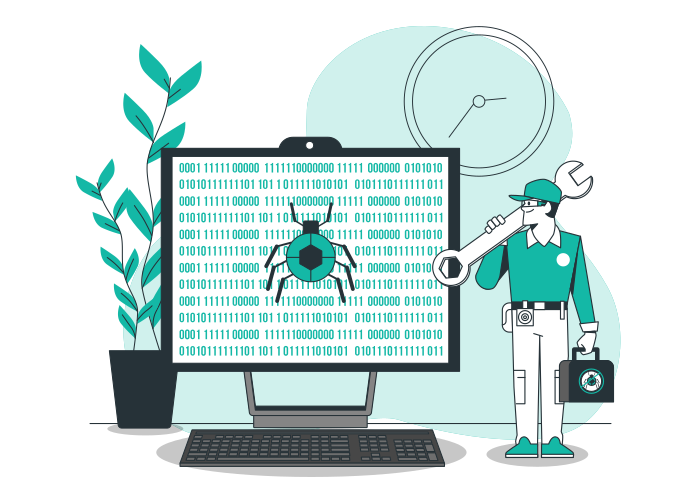
Remediation Support
Hands-on assistance fixing identified vulnerabilities across application and infrastructure layers.
- Fix Guidance: Step-by-step remediation instructions tailored to your stack.
- Developer Collaboration: Work directly with your engineering team to implement fixes correctly.
- Configuration Changes: Assist with secure configuration updates and hardening measures.

Verification & Retest
Validate that all remediations are effective and no new issues were introduced during the fix process.
- Retest Verification: Re-test all remediated vulnerabilities to confirm fixes are effective.
- Regression Check: Ensure fixes didn't introduce new vulnerabilities.
- Final Clearance Report: Deliver a clean assessment report confirming remediation status.
SECURITY SOLUTIONS IN PRACTICE
Example engagements, described the way we'd scope them. These are patterns, not named client results.
Securing a Fintech Platform Before Launch
A fintech startup handling sensitive financial data needed to know its platform was secure before going live. It also needed proof for its regulator.
Approach
- Full web application penetration testing against OWASP Top 10 with business logic focus
- API security assessment covering all payment and data endpoints
- Secure code review of authentication and transaction processing modules
Expected Outcomes
- Critical vulnerabilities found before launch, not after
- Met regulatory security requirements for financial data handling
- A smaller attack surface, with every fix retested
Red Team Assessment for an Enterprise
A mid-sized enterprise suspected their security controls weren't as effective as their compliance reports suggested. They needed a realistic test of their defenses.
Approach
- Multi-phase red team engagement simulating advanced persistent threat (APT) tactics
- Phishing campaign targeting employees across departments to measure human risk
- Internal network penetration testing with Active Directory assessment
Expected Outcomes
- Shows the detection gaps your compliance audits missed
- Phishing results that show which teams need training
- A purple-team follow-up that shortens detection time
Hardening Infrastructure for a Healthcare Provider
A healthcare organization needed to harden their infrastructure against ransomware threats while maintaining system availability for patient care.
Approach
- System hardening assessment benchmarked against CIS and NIST standards
- Network segmentation review to isolate critical patient data systems
- Vulnerability assessment with prioritized remediation roadmap
Expected Outcomes
- Critical vulnerabilities closed in priority order, with a retest after each fix
- Network segmentation prevented lateral movement in simulated attacks
- A patch management routine that shortens the exposure window
INDUSTRY FRAMEWORKS WE FOLLOW
Our assessments are grounded in globally recognized security frameworks and methodologies.
OWASP Top 10
Web & API security standard
MITRE ATT&CK
Adversary tactics & techniques
NIST CSF
Cybersecurity framework
CIS Benchmarks
Configuration standards
PTES
Penetration testing standard
Under NDA, in Writing
Every engagement runs under a signed NDA and written rules of engagement, agreed before any testing starts. The report maps each finding to the framework it breaks, so your auditor can check our work.
WHY CHOOSE IOTRON?
AI can write code. It can't own an architecture. Six things we do that a prompt doesn't, and you can check each one against work we've shipped.
Eight Years in Production
Eight years and 50+ projects: ERP and financial systems, order management, e-commerce platforms, games.
Designed Before It's Built
The data model and the system boundaries are agreed and written down before sprint one, around your process rather than a licence's. Version two extends the system instead of rewriting it.
The Stack Follows the Problem
JavaScript and TypeScript (React, Next.js, Vue, Nuxt, Node, NestJS), PHP (Laravel, Filament), C# (.NET), Python (Django), Java (Spring). The systems can be built in any of them; the stack follows the problem, not habit. On an existing codebase, we work in what's already there.
Working Software From Week 2
Two-week sprints, working software from week 2. A focused MVP takes 8-12 weeks; a full platform takes 4-8 months.
Tested Before It Ships
Automated tests and code review on every merge. Hype's platform ships with 88 backend tests across 20 feature suites, including one that fails if a page starts issuing more database queries than it should.
Engineers Own Every Merge
We use AI for scaffolding, test drafts and code search. Engineers own the architecture and every merge, and you get weekly demos and a direct channel to them.
Questions buyers ask
How do you choose a penetration testing company?
Ask four things. Who does the testing, and is it manual beyond the scanner? Will the report rank findings by what an attacker reaches first, with fix steps? Is a retest included? Can they test what you actually run, such as APIs, cloud and AI features? We answer yes to all four, and we'll show you a sample report before you sign.
What is penetration testing?
Penetration testing is a controlled simulation of real-world attacks against your systems to identify vulnerabilities before malicious actors do. We test web applications, APIs, networks, and cloud infrastructure using the same techniques attackers use.
How often should we do a security assessment?
At least once a year, and again after any major release or infrastructure change. If you handle sensitive data such as payments, health records or personal data, we'd recommend quarterly. Every engagement ends with a retest that confirms the fixes held.
What is the difference between penetration testing and red teaming?
Penetration testing looks for technical vulnerabilities in specific systems, inside an agreed scope. Red teaming plays a full adversary with an objective, combining technical exploits with phishing and social engineering, to test whether your people and processes catch it too.
Do you test AI and LLM applications for security issues?
Yes. We test LLM applications, AI agents, and MCP servers for prompt injection (direct and indirect), jailbreaks, tool-call abuse, RAG and vector store data leakage, unsafe output handling, and cost abuse. We work against the OWASP LLM Top 10 and MITRE ATLAS rather than a generic web checklist, because the failure modes are different.
What is prompt injection and why does it matter?
Prompt injection is when untrusted content, such as a web page, a document or an email the model reads, carries instructions the model then follows as if they came from you. It matters because an agent with tool access can be talked into using those tools: reading data it shouldn't, or calling an API on an attacker's behalf. Filtering can't fully fix it, so we handle it with scoped permissions, human approval on consequential actions, and testing.
Do you provide remediation support after finding vulnerabilities?
Yes. Every assessment ends with a detailed report: prioritised findings, risk ratings and specific remediation steps. We can also fix the vulnerabilities ourselves, not just report them.
What is VAPT?
VAPT stands for vulnerability assessment and penetration testing. The vulnerability assessment scans your web applications, APIs and network for known weaknesses, and we validate each hit by hand to drop false positives. Penetration testing then exploits the ones that matter, inside an agreed scope, to show what an attacker actually reaches. The report ranks findings by CVSS severity and exploitability, with fix steps for each.
What does a network penetration test or security audit cover?
External testing probes what's exposed to the internet: open services, misconfigurations and exploitable entry points. Internal testing starts inside your network and checks lateral movement, privilege escalation and Active Directory. We also review segmentation and firewall rules, so one compromised machine can't reach everything.
Do you test cloud environments?
Yes: AWS, Azure and GCP. We review IAM, storage exposure and network rules, then test what an attacker can actually reach from the internet.
What does web application penetration testing include?
We test authentication, session handling, injection and business logic against the OWASP Top 10, plus the APIs behind the app. Business logic gets manual testing, because scanners don't find it.
Do you do PCI DSS penetration testing?
Yes. We scope the test to your cardholder data environment and segmentation controls and report against PCI DSS requirement 11.4, so your QSA can use it directly.
Do you offer penetration testing as a service (PTaaS)?
Yes. A yearly plan covers a full test, testing after major releases, scheduled vulnerability scanning and retests until each finding is closed. It costs less than buying each test separately.
Can you security-test an app built with AI coding tools?
Yes, and it's worth doing before launch. In Veracode's 2025 test of 100+ AI models, 45% of generated code carried a known security flaw. We test it like any web application, against the OWASP Top 10, with manual checks on the authorization and business logic a model can't see.
LET'S SECURE YOURBUSINESS
Not sure where your vulnerabilities are? Let's talk. We'll assess your security posture and give you an honest, actionable roadmap. No scare tactics, just facts.